













- Myth #1: Mobile Banking Is Less Secure Than Desktop
- Myth #2: Apps Process Deposits and Withdrawals More Slowly
- Myth #3: Not All Payment Methods Work on Mobile
- Myth #4: Mobile Limits Are Lower Than Desktop
- Myth #5: Crypto Transactions Only Work on Computers
- Myth #6: Browser Versions Are Better Than Apps
- What Really Matters in Mobile Banking
The Biggest Misconceptions About Mobile Banking at PlayFina – What's Actually True?
Here's something surprising: Over 60% of all online casino transactions in Germany now happen via smartphones. Yet persistent myths remain that mobile banking is somehow worse, slower, or less secure. Time to put these fairy tales to rest.
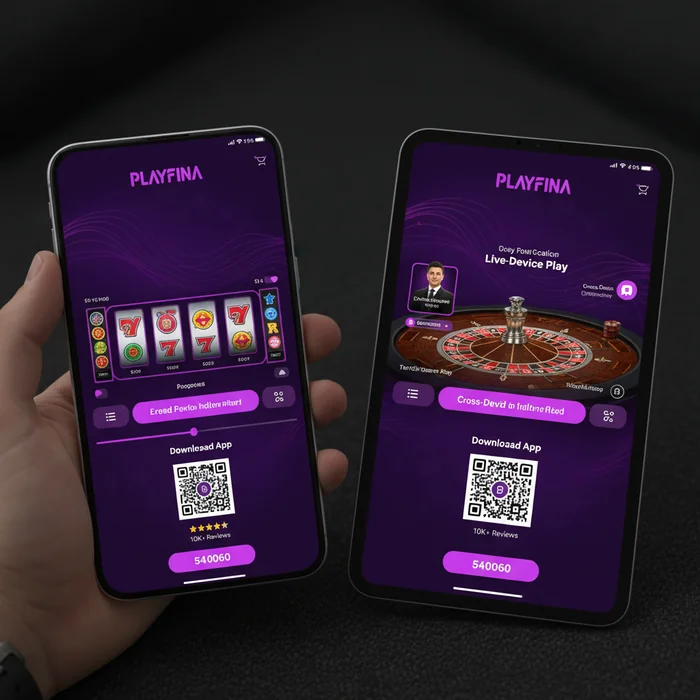
The truth is far more interesting than the rumors. Modern platforms like PlayFina have often optimized their mobile infrastructure even better than the desktop version – simply because that's where most users are. Let's look at which myths should finally die in 2026.
Myth #1: Mobile Banking Is Less Secure Than Desktop
Where This Misconception Comes From
This myth stems from the early days of smartphones, when banking apps actually did have security vulnerabilities. Many remember headlines about hacked mobile banking systems from ten years ago. The problem: These memories stick, while the technology has long since evolved.
There's also a psychological component – a desktop computer simply feels more "solid." Bigger screen equals more security? That's not how it works, of course, but our gut tells us otherwise.
What the Facts Show
The reality looks completely different. Mobile payment systems today use multi-layered encryption that's at least on par with desktop solutions – often even better. At PlayFina, for example, every transaction runs through the same 256-bit SSL encryption, whether on laptop or smartphone.
The real advantage of mobile devices: biometric authentication. Fingerprint or facial recognition provides a security layer that desktop computers simply don't have. Add to that two-factor authentication, which is standard for mobile transactions.
The Actual Truth
Platforms in the German market must meet the same licensing requirements – regardless of device. The Curacao license demands identical security standards for all access methods. What differs is at most the user interface, not the underlying infrastructure.
Myth #2: Apps Process Deposits and Withdrawals More Slowly
Why This Myth Persists
Early casino apps were indeed often slower – they had to synchronize data through cumbersome channels. Anyone who requested a withdrawal five years ago sometimes waited hours longer on mobile than on desktop. These experiences still shape expectations today.
There's also perceived speed. On a small screen, loading times seem longer, even when they're objectively identical. Our brain plays tricks on us.
The Measurable Reality
Modern systems work with direct API connections to payment providers. Whether the request comes from an app, mobile browser, or desktop is completely irrelevant to the payment processor. Processing time depends exclusively on the chosen method – not the device.
At PlayFina, this looks like this in practice: A Skrill deposit is in your account in 2-3 minutes, whether from iPhone or Windows PC. Crypto transactions take their usual 10-30 minutes for blockchain confirmations – regardless of device. Processing speed lies completely outside app technology.
What Really Makes the Difference
| Payment Method | Desktop Speed | Mobile Speed | Actual Difference |
|---|---|---|---|
| Visa/Mastercard | Instant | Instant | No variance |
| E-Wallets (Skrill, Neteller) | 2-3 minutes | 2-3 minutes | No variance |
| Cryptocurrencies | 10-30 minutes | 10-30 minutes | No variance |
| Bank Transfers | 1-3 business days | 1-3 business days | No variance |
Myth #3: Not All Payment Methods Work on Mobile
The Origin of This Misconception
This myth has a grain of truth – albeit an outdated one. Until about 2020, many platforms indeed had limited mobile payment options. Crypto wallets were complicated to integrate on smartphones, and some banking methods only worked with desktop plugins.
The cool thing is: These technical hurdles no longer exist. Progressive web apps and modern API interfaces have completely leveled the playing field.
The Current State in 2026
At PlayFina, exactly the same payment methods are available on mobile as on desktop. This includes Visa, Mastercard, e-wallets like Skrill and Neteller, as well as cryptocurrencies. No restrictions, no hidden exceptions.
The minimum deposit is 20 euros – whether from tablet or laptop. Withdrawals start at 20 euros, with crypto users sometimes seeing higher minimums (depending on network fees, not the platform itself).
Why Completeness Matters
This reveals a quality indicator: Platforms that take their mobile experience seriously invest in complete payment integration. Anyone still saying "this method only works on computer" in 2026 simply hasn't done their homework. This is a rare feature among smaller providers, but standard among established names.
Myth #4: Mobile Limits Are Lower Than Desktop
Where This Assumption Comes From
This myth springs from logical – but false – reasoning. Many think: "If I'm quickly depositing something on the go, the platform surely wants smaller amounts." Sounds plausible, but has zero connection to reality.
Early mobile banking apps did indeed sometimes have daily limits that were lower than desktop versions. This was a security measure against stolen devices. But this practice is long outdated.
The Actual Limits
Transaction limits are set by payment providers and licensing conditions – not by the device. At PlayFina, the maximum for individual withdrawals is 10,000 euros, whether the request comes from smartphone or desktop. Monthly withdrawal limits can be higher, depending on VIP status.
What can differ: visibility. On a small screen, you might not immediately see all available limits, but the numbers themselves are identical. That's a UX problem, not a technical limit.
Why Equality Is Standard
So basically, the system works like this: Your account has certain limits tied to your verification status. A fully verified account can move the same amounts on mobile as on desktop. Unverified accounts have lower limits – but consistently across all devices.
Myth #5: Crypto Transactions Only Work on Computers
The Root of This Misunderstanding
Crypto still has this reputation as "nerd technology for desktop power users." Early wallets were indeed complicated and barely usable on mobile. QR codes didn't work well, addresses had to be copied manually – a nightmare on small screens.
There's also legitimate concern: Crypto transactions are irreversible. A typo in the wallet address, and the money is gone. On a smartphone with autocorrect? Sounds like disaster.
How Mobile Crypto Banking Works Today
The reality in 2026 is much more relaxed. Mobile crypto wallets like Trust Wallet or MetaMask are specifically optimized for smartphones. QR code scanners eliminate address entry – just scan, confirm amount, done.
At PlayFina, the process works like this: You choose crypto as deposit method, get a wallet address displayed as QR code, scan it with your mobile wallet app, send the amount. No manual entry, no copy-paste drama. Confirmation takes the same 10-30 minutes as on desktop – depending on blockchain congestion, not your device.
Why Mobile Crypto Even Has Advantages
No big deal, but: Most new crypto users today start directly on mobile. Desktop wallets have become more the exception. Platforms supporting crypto have long adapted their systems accordingly. This is an above-average feature for platforms that understand the trend.
Myth #6: Browser Versions Are Better Than Apps
Why This Debate Even Exists
There are actually two camps here. Some swear by browsers because they don't want to install an app. Others prefer apps for supposedly better performance. The truth lies somewhere in between – but differently than most think.
At PlayFina, there isn't even a dedicated app in the classic sense. Instead, the platform uses a Progressive Web App (PWA) – a hybrid solution combining the best of both worlds. This is now standard practice among modern platforms.
PWA vs. Native App vs. Browser – What It Means for Payments
For banking functions, the access method makes virtually no difference. Whether you access via Safari, Chrome, or a PWA added to your home screen – payment processes run through the same server interfaces. Deposits take the same time, security is identical, available methods are the same.
What differs: convenience. A PWA can be launched like an app but doesn't require an App Store download. You save storage space and bypass the sometimes annoying store restrictions for gambling apps. For quick transactions on the go, this is ideal.
The Real Advantage Lies Elsewhere
| Feature | Mobile Browser | Progressive Web App | Native App |
|---|---|---|---|
| Installation Required | No | Optional (Home Screen) | Yes (App Store) |
| Payment Speed | Identical | Identical | Identical |
| Available Methods | All | All | All |
| Storage Space | Minimal | Minimal | 50-100 MB |
| Updates | Automatic | Automatic | Manual |
When it comes to redeeming welcome bonuses, the access method doesn't matter either – bonus terms apply across all devices.
What Really Matters in Mobile Banking
So, let's summarize: Most myths about mobile casino banking come from a time when smartphones actually did have limitations. That era is long gone in 2026. Modern platforms treat mobile and desktop users absolutely equally – and for good reason.
How to Recognize Misinformation
If someone claims mobile transactions are slower, less secure, or more limited – ask for concrete numbers. Usually there aren't any. Instead, you hear vague phrases like "I heard" or "supposedly it's like that." These are warning signs of myths, not facts.
Credible information comes with verifiable details: specific timeframes, named payment methods, measurable limits. Everything you've read in this article can be verified through your own tests.